

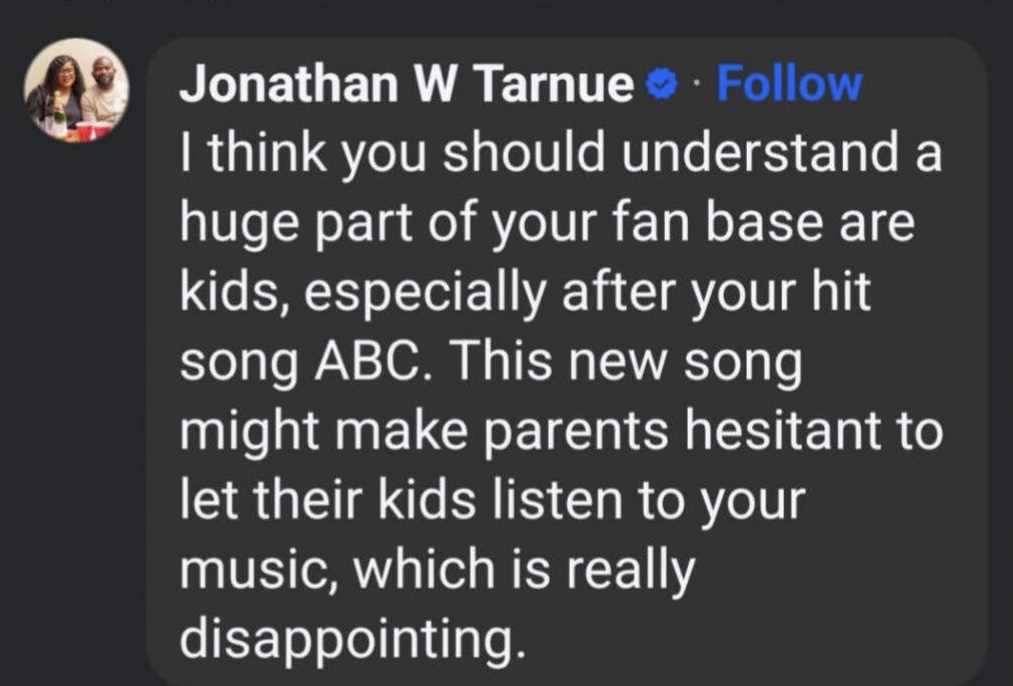
The recent controversy surrounding Liberian hipco artist King Dennis highlights the delicate balance that musicians face when their artistic evolution conflicts with the expectations of their established fanbase. On January 2, 2025, Jonathan W. Tarune, a devoted supporter, expressed profound disappointment through social media regarding King Dennis’s contribution to “XXX,” a collaborative track produced by T Que Beatz and featuring artists including Christoph the Change, Muzikal, and Rafield G. Tarune’s message resonated with many parents and young listeners who had come to appreciate King Dennis as a family-friendly artist, particularly following the massive success of his youth friendly hit song “Hipco Alphabet (A-Z).” The fan’s words struck at the heart of the artist’s identity crisis: “I think you should understand a huge part of your fan base is kids, especially after your hit song ABC. This new song might make parents hesitant to let their kids listen to your music, which is really disappointing.”
Released on December 24, 2024, as what T Que Beatz described as a “feel good song,” “XXX” took a sharply different direction from the wholesome content that had endeared King Dennis to younger audiences and their parents. The track embraced explicit sexual themes and X-rated lyrics from all featured artists, representing a significant departure from the educational and positive messaging that characterized King Dennis’s earlier work. The timing of the release during the holiday season, when families traditionally gather and celebrate together, added another layer of complexity to the situation. While the producer may have intended the song as adult entertainment targeting mature audiences, the inclusion of an artist who had cultivated a child-friendly reputation created inevitable confusion and concern among fans who had come to trust King Dennis’s judgment and artistic direction.
King Dennis’s response to the backlash, also shared on social media on January 2, 2025, acknowledged the validity of his critics’ concerns while attempting to contextualize his artistic choices. The artist explained that he was “only going along with the theme of the song” when crafting his verse, suggesting that he felt pressure or obligation to conform to the collaborative nature of the project rather than maintaining his established brand identity. His apology for “being nasty on the song through his lyrics” demonstrated awareness of how his contribution had affected his relationship with fans, particularly the younger demographic that had embraced his music through songs like “Hipco Alphabet.” This response reveals the challenging position artists find themselves in when navigating collaborative projects that may conflict with their solo artistic vision and the expectations of their core audience.

The controversy surrounding “XXX” speaks to broader issues within the music industry regarding artistic responsibility and the influence of musicians on young audiences. King Dennis’s situation illustrates how quickly an artist can alienate their support system when they venture into territory that contradicts their established public persona, particularly when that persona includes a significant following of children and families. The disappointment expressed by Tarune and other fans reflects not just personal preference but a genuine concern about the content their children consume and the role models they look up to in the entertainment industry. For many parents, King Dennis had become a safe choice for introducing their children to Liberian music and hipco culture, making the sudden shift to explicit content feel like a betrayal of that trust and potentially damaging to the artist’s long-term career prospects.



Looking forward, this incident serves as a crucial learning opportunity for King Dennis and other artists who find themselves caught between artistic expression and audience expectations. The challenge moving forward will be finding ways to evolve as an artist while maintaining the connection with the fanbase that helped build their career, particularly when that fanbase includes vulnerable populations like children. King Dennis’s willingness to apologize and acknowledge his mistake suggests he understands the importance of this balance and may take steps to rebuild trust with his audience. The music industry often pressures artists to adapt to current trends and collaborate on projects that may not align with their personal brand, but this controversy demonstrates the very real consequences of abandoning one’s established identity without considering the impact on those who have invested their support in an artist’s career. Whether King Dennis can recover from this setback and regain the confidence of his family-oriented fanbase remains to be seen, but the lesson about the importance of artistic integrity and audience awareness has been clearly delivered.